
Truecare Multi-speciality Hospital, Kolar
Cardiology and heart care in Kolar
Evaluation and management of cardiovascular conditions, including hypertension, chest discomfort, palpitations, heart failure and coronary risk factors. Appropriate cardiac investigations help support diagnosis and treatment planning.
Medically reviewed by Dr. Saqlain Mohamed. Last reviewed: 6 November 2026.
What does Cardiology cover at TrueCare?
- Hypertension
- Chest discomfort
- Palpitations
- Heart failure
- Coronary risk factors
- Cardiac investigations to support diagnosis and treatment planning
Conditions We Treat
- High blood pressure (hypertension): Checking, monitoring and long-term management of blood pressure.
- Chest discomfort and angina: Evaluation of chest pain or tightness to find out whether the heart is the cause.
- Palpitations and irregular heartbeat: Assessment of a racing, pounding or uneven heartbeat.
- Heart failure: Ongoing care for people whose heart is not pumping as well as it should, with regular follow-up.
- Breathlessness and swelling of the feet: Evaluation of possible heart causes.
- Coronary risk factors: Managing blood pressure, cholesterol, diabetes, weight and smoking, which raise the risk of heart disease.
- Heart health risk assessment: Check-ups for people with a family history or risk factors for heart disease.
When Should You See a Cardiologist?
- You get breathless while walking, climbing stairs or lying flat.
- You have palpitations, dizziness or fainting.
- Your feet or ankles are swollen, or you feel unusually tired.
- Your blood pressure readings are high, or you are on treatment for blood pressure.
- You have diabetes, abnormal cholesterol, you smoke, or heart disease runs in your family.
- You have been treated for a heart problem and need follow-up.
Emergency Warning Signs
Seek emergency care straight away if you have:
- Chest pain, pressure, tightness or heaviness, especially if it spreads to the arm, jaw, neck or back, or comes with sweating, nausea or breathlessness.
- Sudden severe breathlessness, or breathlessness while resting.
- Fainting or nearly fainting.
- A very fast, very slow or irregular heartbeat with dizziness or chest discomfort.
- Sudden weakness of the face, arm or leg, trouble speaking, or sudden loss of vision.
- A very high blood pressure reading with severe headache, chest pain, confusion or vision changes.
In an emergency, call our emergency line +91 63601 66366 (emergency care is available 24 hours) or go to the nearest emergency department. Please do not drive yourself.
What Happens During Your First Visit?
- Your blood pressure and pulse are checked, and a physical examination is done.
- An ECG may be done. Depending on your symptoms, tests such as 2D echo, TMT or blood tests may be advised.
- The doctor goes through your risk factors, such as blood pressure, sugar, cholesterol, weight and smoking.
- You agree on a plan and a follow-up schedule.
What should you bring?
- All current medicines, or your prescriptions.
- Your blood pressure readings, if you check them at home.
- Relevant allergy information.
- Identification and insurance documents, if applicable.
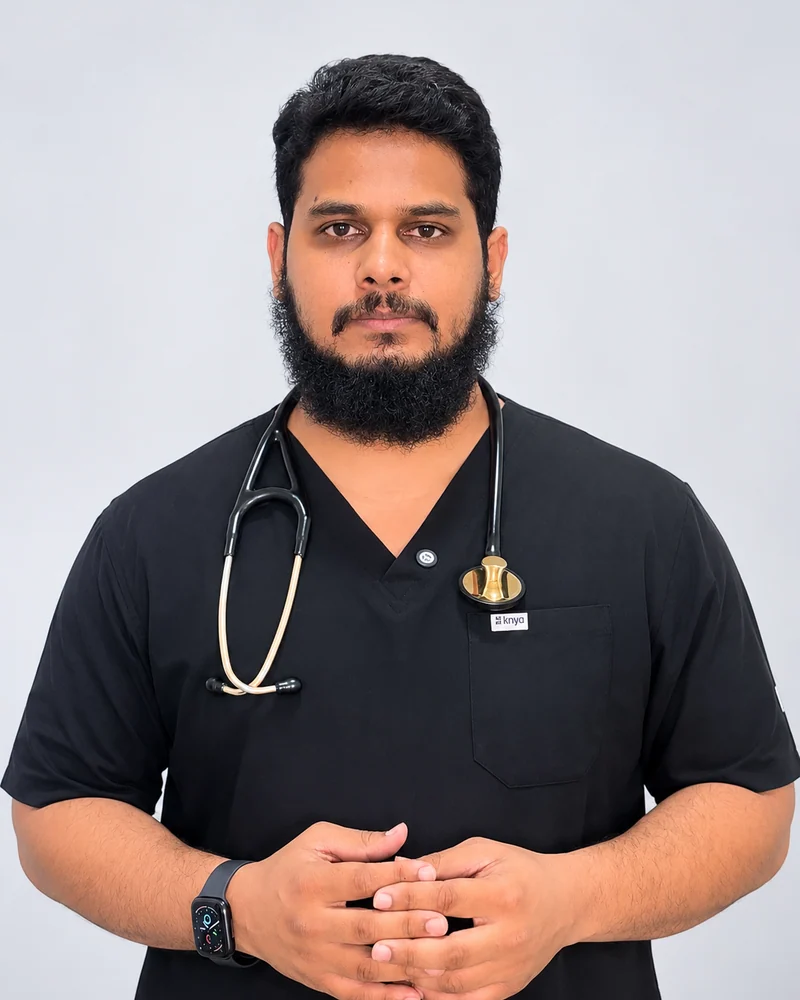
Who is the doctor for Cardiology?
Please confirm the doctor’s availability and consultation timings before visiting.
Frequently Asked Questions
Which symptoms should make me see a heart doctor?
Chest discomfort, breathlessness, palpitations, dizziness or fainting, swelling of the feet, or unusual tiredness when you are active. If you are not sure, it is better to get checked.
Is chest pain always a heart problem?
No. It can also come from muscles, acidity or the lungs. But chest pain should not be ignored. It needs to be checked, especially if it comes with breathlessness, sweating or pain spreading to the arm or jaw.
Which tests may be advised?
Depending on your symptoms, your doctor may advise an ECG, 2D echo, a TMT (stress test) or blood tests. You will only be asked to do the tests you need.
How can I lower my risk of heart disease?
Keep blood pressure, blood sugar and cholesterol under control, avoid tobacco, stay active as advised by your doctor, eat a balanced diet, maintain a healthy weight and go for regular check-ups.
Do I need to take heart medicines for life?
It depends on your condition. Please never stop or change your medicines on your own. Your doctor will review them regularly.
Can high blood pressure cause problems even without symptoms?
Yes. High blood pressure often has no symptoms, which is why regular blood pressure checks are important.
Book a Cardiology consultation in Kolar
Truecare Multi-speciality Hospital, C.B. Pur Main Road, Arahalli Gate, Kolar, Karnataka 563101. For appointments, specialist consultations and enquiries, call or WhatsApp +91 63601 66366. In a life-threatening emergency, seek immediate medical help.